April 2010


The next book21 Apr 2010 11:23 am

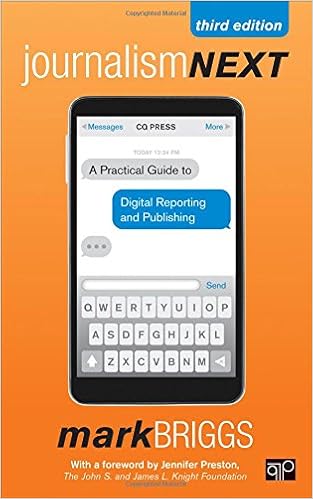
Several people have asked if and when electronic versions of my new book, Journalism Next, might become available. The good news: fairly soon.

Chris O’Brien, Marketing Manager of the College Publishing Group at CQ Press sent me this update yesterday:

“The book is now in Amazon’s Kindle ingest process, which can take anywhere from two to four weeks.  As you can imagine, there are a number of variables that contribute to the timeline for this (all under Amazon’s control), but hopefully since your book has shown some nice sales so far through Amazon, it will encourage them to speed it up!”

The book will also be available a la carte in electronic form on CQPress’s new custom publishing website, hopefully within the next month.

Future is now19 Apr 2010 04:14 pm

Still think NPR is a cute little public radio station? Think again.

The same technology that brought Google Maps to so many websites – the Application Programming Interface (API) – is now enabling NPR to become a distribution juggernaut. The news organization distribute the same content in many forms to many destinations with hardly any extra effort. This is the scale that publishers have longed for: create content once and see it published anywhere that can be imagined.

The NPR API delivered more than 1.1 billion stories last month and almost 5 million total in the past six months, according to a blog post today by NPR Director of Application Development Daniel Jacobson.”The big jump in total API requests from July to August are due to the launch of many new products in July,” Jacobson wrote. “Among them are the new NPR.org, the NPR.org Flash Player, the NPR News iPhone app, WBUR’s new web site, and Minnesota Public Radio’s new site.”

“While some media companies, such as News Corp, attempt to block their content from distribution, the NPR API seems to be making access to its content widespread,” Mike Melanson wrote on ReadWriteWeb.

Indeed, this strategy and execution is impressive. The combined reach through all the different channels that NPR content flows does nothing but build audience and brand loyalty, critical pieces of the NPR model.

Jacobson also posted an amazing slideshow (embedded below) that illustrates the life cycle, distribution and some key metrics for an NPR story. This is the way all new publishers should be producing their content and organizing their workflow.

Practical advice08 Apr 2010 01:41 pm

By Jake Batsell

Landing a plum newsroom job straight out of college has never been an easy feat. But this year’s journalism graduates face a double-barreled challenge: an unusually stingy job market and a growing perception that their generation has a “lax work ethic,” as a Washington Post headline declared last week.

The Post’s story was pegged to the Pew Research Center’s new project on millennials. If you spend time sorting through the Pew research, you’ll find that it even-handedly portrays millennials as “confident,” “connected” and “open to change.” Still, the “spoiled” tag persists. Having spent my 20s trying to defy the Gen X slacker stereotype as I worked to prove myself in metro newsrooms, I can relate to millennials who feel frustrated by pop-culture labels.

I’ve worked with millennials for the past two years teaching digital journalism at Southern Methodist University and advising the SMU Daily Mustang. Newsroom bosses, listen up – here are some things you need to know about your latest crop of entry-level hires:

They respond well to clear expectations.

“Got it.” Those are my two favorite words in the millennial lexicon. When you offer clear instruction to a young journalist and hear those two magic words, you can take it to the bank that they’ll follow through. This is not a rebellious generation. Pew’s research shows that they respect their elders. But if you fail to communicate your expectations clearly and assume they already know things that you take for granted, you could be in for a long day.

They’re creative and adaptable.
It’s a myth that all millennials are technical whizzes – every semester in my digital journalism class, there are a handful of self-proclaimed technophobes. Sure, they live on Facebook, but that doesn’t mean they all know how to write a <div> tag in HTML. That said, these “digital natives” are quick studies who love to try new things. This week, I was delighted to discover that two of my students took the initiative to post an instant video report from spring football practice from an iPhone, using free Qik software.
Continue Reading »