A few days ago I received an email from Publish2 announcing a new set of tools that will create “social journalism.” The very next day, an email hit my inbox from a site proclaiming to have created a “first-of-its kind ‘social newspaper.'” Which got me thinking: how much more social can news and journalism get?
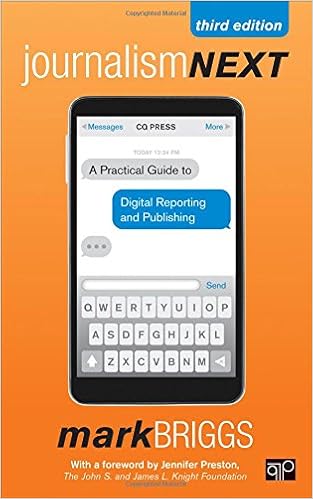
Granted, I run a company that licenses software to power social mapping for news and local shopping, so I’m bullish on the concept of collaborative publishing. My new book, Journalism Next, is filled with lessons of how the power of the crowd contributes to better journalism. While it took journalists several years to embrace Web 2.0, allowing visitors to create content, add comments and upload photos, social media has been adopted much quicker.
The painful and often arbitrary discussions in newsrooms on whether user generated content had any place next to “true” journalism certainly loosened the ground. And the motivation of a crumbling business infrastructure has played a role. But I’m still struck by how long it took journalists (years!) to recognize how powerful and flexible blogs are as a publishing platform and how quickly they flocked to Facebook and Twitter.
The new Publish2 toolset aims to help journalists “curate the real-time web,” according to a blog post by Scott Karp. This is exactly the direction news organizations should be heading in and they should be thankful that Karp and his company are helping them keep pace technologically with the HuffPos, Politicos and Techcrunches of the world. Even AOL, which now has 1,500 writers, sees opportunity in competing with (or eventually replacing?) traditional news media. (The company’s evolution from ISP to content powerhouse is a lesson many print and broadcast companies could learn from, too.)
Startup companies see opportunity in the social news space, too. SodaHead, headed by early MySpace employees, shifted its strategy from a create-your-own-quiz site to focus on creating this “social newspaper” site, though it’s hardly “first of its kind.” Apparently the PR people have never heard of Newsvine, which launched in 2006, and the many other copycat sites created since then.
Social media, social networking, social marketing and now social journalism. It’s a social world, for sure, and it seems few people are bowling alone.
 Mark Briggs
  Posted in