How long will colleges continue to offer journalism as a major?
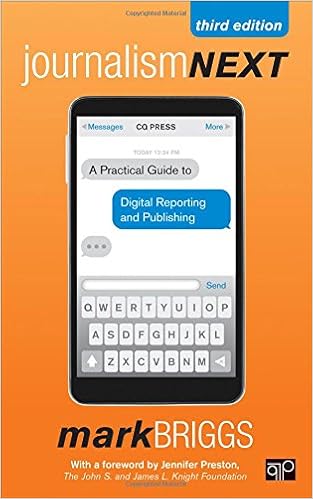
I ask this question as someone with two journalism degrees, who just finished writing a journalism textbook and who as the word in his URL. But as bullish as I am on the future of journalism, I’m skeptical that traditional college journalism programs can keep pace with the requirements of the digital age. And I know I’m not the only one.
So why not make journalism a specialty of an overall communications major? This would make room for more courses on content and community management, which are the skills in demand by digital news publishers and all sorts of companies today. Shouldn’t colleges be expanding the options for their graduates instead of limiting them?
Journalism has a long, important history in this country. But content may be a more promising business model in the digital age. So if that’s where the jobs are and will be, colleges would be smart to start moving their curriculum in that direction.
Students are still drawn to journalism. In fact, I hear that admissions to J-schools are at all-time highs. It’s a profession rather than a job, so it sounds more noble and distinguished. But as Clay Shirky wrote in Here Comes Everybody, now that everyone can easily publish (no more gatekeepers), journalism is no longer a scarce profession, so what are students preparing for?
A profession exists to solve a hard problem, one that requires soome sort of specialization. Drive a race car requires special training–race car drivers are professionals. Driving an ordinary car, though, doesn’t require the driver to belong to a particular profession, because it’s easy enough that most adults can do it with a modicum of training.
Ah, but journalists are race car drivers, you argue. They attend meetings, dig through public records to check people, develop sources and write better than amateur, or “ordinary,” content producers. But denying that good journalism can come from people without formal training is blissful ignorance and, frankly, dangerous to your business. Shirky again:
There was a kind of narcissistic bias in the profession; only threats they tended to take seriously were from other professional media outlets. This bias had them defending against the wrong thing when the amateurs began producing material on their own.
Colleges should still play a role, of course. But they have to acknowledge how quickly the landscape is changing and be able to add new courses at the drop of a hat, without layers of committee approval. (The University of Washington did this over the summer with a course on Twitter, for example.) They need more faculty to jump in and participate in digital publishing and social media. Building a career in analog publishing and pleading ignorance about the new world is no excuse. Figure it out. That’s how everyone else learned to blog, shoot video and use social media.
I know many college journalism professors “sprinting” to try to change their programs, but brick walls are everywhere. Unfortunately, there are more who don’t get it, including some college newspapers who still don’t have a web site!
We still need dogged investigative reporters, great copy editors and visual journalists. But limiting the education to traditional tracks of journalism is doing students a great disservice. As Patrick Thornton wrote:
Do not under any pretext attend journalism school — undergrad or graduate — with the mission of working for a large metro or some other established, old-media publication. While you may be able to get a job at one of those, don’t count on it. Not for a second.
This applies to radio, TV, magazines and books, too. Journalism is still an important skill, but it’s really a subset of content and community management, which is something every company needs right now. How else to explain a report like the one Marshall Kirkpatrick wrote about managing an online community that is selling well at $300 a pop?
So keep journalism instruction, but demote it. Build a layer on top of your communication program that teaches students digital publishing, social media, and the art of community management. It would be much easier to start a career with that kind of experience and knowledge than journalism alone.
 Mark Briggs
  Posted in



The police division in Tucson, Ariz. has produced raw movie footage from the camera law enforcement officer Joel Mann was sporting when he brutally pummeled a female university student who was going for walks innocuously just from the campus of the College of Arizona.
I simply want to say I am just all new to weblog and actually enjoyed this web page. Most likely I’m planning to bookmark your website . You certainly have beneficial writings. Thanks for sharing with us your blog.
good~ https://www.wooricasinokorea.com/sandscasino 샌즈카지노
An additional issue is that video gaming has become one of the all-time most important forms of fun for people of every age group. Kids have fun with video games, and also adults do, too. Your XBox 360 is probably the favorite gaming systems for those who love to have a huge variety of games available to them, along with who like to learn live with some others all over the world. Thanks for sharing your ideas.
The the next occasion Someone said a blog, Hopefully it doesnt disappoint me just as much as brussels. I mean, Yes, it was my method to read, but When i thought youd have some thing fascinating to convey. All I hear is really a handful of whining about something you could fix when you werent too busy trying to find attention.
You made some good points there. I looked on the net for additional information about the issue and found most people will go along with your views on this web site.
Oh my goodness! Amazing article dude! Thanks, However I am going through problems with your RSS. I don’t know the reason why I can’t join it. Is there anybody having similar RSS problems? Anyone who knows the answer can you kindly respond? Thanks!!
Do you believe past life regression? Do you think is reincarnation real?
Hi there! This post could not be written any better! Looking through this article reminds me of my previous roommate! He constantly kept talking about this. I’ll forward this article to him. Pretty sure he will have a very good read. Thanks for sharing!
Hey there! I just wish to offer you a big thumbs up for the excellent info you have got right here on this post. I am coming back to your site for more soon.
I have observed that in the world the present moment, video games are definitely the latest phenomenon with kids of all ages. There are times when it may be not possible to drag your kids away from the activities. If you want the best of both worlds, there are numerous educational games for kids. Good post.
Faytech North America is a touch screen Manufacturer of both monitors and pcs. They specialize in the design, development, manufacturing and marketing of Capacitive touch screen, Resistive touch screen, Industrial touch screen, IP65 touch screen, touchscreen monitors and integrated touchscreen PCs. Contact them at http://www.faytech.us, 121 Varick Street, New York, NY 10013, +1 646 205 3214.
It’s hard to come by educated people on this subject, however, you seem like you know what you’re talking about! Thanks
Varick Street Litho , VSL Print is one of the top printing company in NYC to provide the best Digital Printing, Offset Printing and Large Format Printing in New York. Their printing services in NYC adopts state of the art digital printing services and offset digital printing for products postcards, business cards, catalogs, brochures, stickers, flyers, large format posters, banners and more for business in NYC. For more information on their digital printing nyc, visit http://www.vslprint.com/ or http://www.vslprint.com/printing at 121 Varick St, New York, NY 10013, US. Or contact +1 646 843 0800
Right here is the perfect blog for everyone who wishes to find out about this topic. You know a whole lot its almost tough to argue with you (not that I really will need to…HaHa). You definitely put a fresh spin on a subject that has been written about for years. Excellent stuff, just wonderful.
This site really has all of the information and facts I wanted about this subject and didn’t know who to ask.
After looking over a few of the blog articles on your web page, I truly appreciate your way of writing a blog. I added it to my bookmark site list and will be checking back in the near future. Please visit my web site as well and let me know what you think.
I need to to thank you for this excellent read!! I absolutely loved every bit of it. I’ve got you bookmarked to look at new stuff you post…
I love reading a post that can make men and women think. Also, many thanks for allowing for me to comment.
Howdy! I could have sworn I’ve been to this website before but after browsing through a few of the posts I realized it’s new to me. Nonetheless, I’m definitely delighted I came across it and I’ll be book-marking it and checking back regularly.